Making a positive impact on communities
- Jan 1, 2026
- 3 min read
Updated: Mar 2

Unmonitored malaria transmission in endemic settings remains a significant contributing factor to sustained disease prevalence and prevents successful disease elimination. The most prevalent species of malaria parasite, Plasmodium falciparum, is transmitted between human hosts by the bite of Anopheles mosquitoes. These transmissible forms of the parasites are called gametocytes. Gametocytes are physiologically different to the replicative pathogenic stages. Current diagnostic and treatment tools are not tailored to detect these gametocyte forms because technologies that can specifically distinguish between the gametocyte and pathogenic stages are limited.
Therefore, for this project, Dr Coertzen aims to develop a robust, reproducible RT-qPCR-based molecular tool for detecting gametocytes in field-collected whole-blood samples. The first stage of the project entails developing a molecular detection tool using in vitro-generated laboratory cultures of transmissible gametocytes with gametocyte-specific markers. We aim to create and validate this detection tool using laboratory-produced parasites, then apply it to field-collected samples. This will be performed by investigating the effectiveness of novel blood collection samplers in preserving gametocyte genetic material (RNA) and by combining this with a direct sample-to-RT-qPCR analysis kit (Takara Prime Direct) to minimise sample handling steps.
Progress to date:
Registered an MSc student and researcher on the project (Miss Indileni Mwadulange, s26532353). She will assist with sampling, cataloguing, storage, processing, and analysis.
Submitted ethics applications for the project to the University of Pretoria, Natural and Agricultural Sciences Faculty (NAS), and Health Sciences (HS) Faculty. Received approval from the NAS Faculty.
Submitted ethics applications to the Department of Health, Limpopo province (for the collection of field samples). Ethics approval is dependent on the outcome of HS ethics.
Training of MSc student/technician for the production of in vitro cultures enriched for both pathogenic and gametocytes. Gametocyte-specific gene products were quantified from RNA isolated from these laboratory-generated cultures.
This was followed by quantification through probe-based RT-qPCR, validating the stage-specific detection of gametocytes through these markers. We have also included an additional marker for the quantification of asexual pathogenic stages. This would allow ratiometric detection of pathogenic stages relative to gametocyte stages in field-collected samples from symptomatic individuals.

These primers and probes will also be designed and validated against laboratory-grown parasite samples. Dr Coertzen previously reported that the Neoteryx samplers were unable to provide sufficient RNA for RT-qPCR. Therefore, the team would have to use whole blood collection tubes instead. The use of these tubes creates a dependence on sample collection by trained phlebotomists at clinics for this project, which would have been negated if the Neoteryx samplers had been feasible. The team have, however, included this aspect as part of our ethics applications. Among the commercial blood tubes capable of preserving RNA from whole blood samples, we have determined that the RNA Shield tubes (ZYMO Research) are chemically compatible with the Takara PrimeDirect qPCR kit proposed for this project.
UP ethics approval from NAS and HS faculties has taken considerably longer than expected. Thus, the field trip planned for October 2025 had to be rescheduled for February 2026. The second field trip, initially scheduled for this period, will therefore be rescheduled for October 2026.
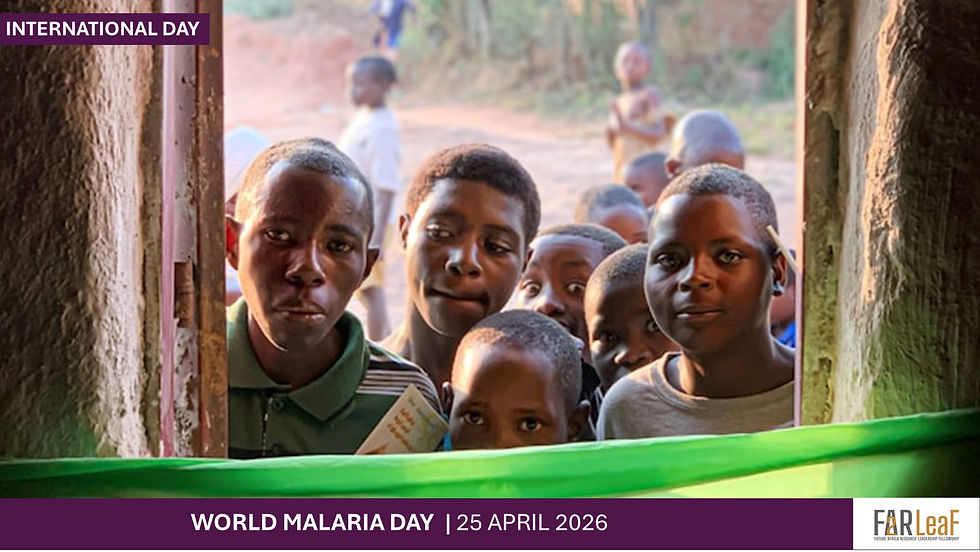
In earlier studies in which the team administered questionnaires to patients in clinics and rural endemic areas, communities were always very responsive to the research. In particular, when surveyed about their willingness to let their children (under 5 years old) participate in disease monitoring studies, parents were highly willing to consent to having blood samples collected from their children. They see the value of the research and its positive impact on their community.
A challenge the team has is whether they should collect samples from illegal immigrants working on farms in our endemic setting. These workers are particularly susceptible to being infected with malaria parasites and can act as reservoirs in sustaining transmission. However, due to their status, they cannot participate in these studies.
Dr Dina Coertzen reporting on her progress for the following research project: Informing Malaria Transmission Dynamics to Guide Sustainable Control Interventions for Disease Elimination.
Edited by Heidi Sonnekus & Leti Kleyn for the FAR-LeaF programme.