Report | Science communication for climate resilience among smallholder farmers in Murang'a County
Updated: Oct 12

Capacity Strengthening and Dissemination Workshop on Science Communication for Climate Resilience among Smallholder Farmers in Murang'a County
Partners: African Centre for Technology Studies (ACTS), Murang'a University of Technology (MUT) & Future Africa Research Fellowship Leadership Programme (FAR-LeaF II)
Venue: Murang’a University of Technology (MUT)
Date: 31 July 2026
Convener: Dr Ruth Wambui
Rapporteurs: Faith Kemunto, Priscilla Njue, Mary Maina, Beatrice Obaga
and Ruth Wambui
TABLE OF CONTENTS | |
Executive Summary | |
1.0 | Background |
2.0 | Workshop Objectives |
3.0 | Workshop Methodology |
4.0 | Workshop Outcomes |
4.1 Understanding Climate Risks and Adaptation – Presentation by Dr Ruth Wambui 4.1.1 Mapping Climate Risk Areas 4.1.2 Interactive Climate Risk Activity 4.1.3 Existing Adaptation Practices Identified Through the Research 4.2 Fishbowl Discussion: Climate Risks and Adaptation 4.3 Panel Discussion: Climate Information, Misconceptions and Stakeholder Perspectives 4.3.1 Sources of Climate Information 4.3.2 Climate Information and Misconceptions 4.3.3 From Dialogue to Collaboration 4.4 Climate Change Adaptation Measures and Strategies for Different Regions of Murang'a County: Presentation by Dr Orek 4.4.1 Adaptation Strategies for the Highland Regions 4.4.2 Adaptation Strategies for the Midland Regions 4.4.3 Adaptation Strategies for the Lowland Regions 4.4.4 Linking Climate Risks to Adaptation 4.5 Innovative Science Communication Strategies 4.6 Interactive Reflection and Icebreaker | |
5.0 | Overall Workshop Outcomes and Reflections |
6.0 | Way Forward and Recommendations |
7.0 | Conclusion |

EXECUTIVE SUMMARY
The Future Africa Research Leadership Fellowship Programme (FAR-LeaF II) research project, under the theme "Communicate It Their Way," seeks to strengthen climate science communication by making climate information relevant, accessible and useful to communities. A capacity strengthening and dissemination workshop on science communication for climate resilience among smallholder farmers in Murang'a County was held on 31 July 2026 at Murang'a University. The workshop brought together smallholder farmers, educators, students and stakeholders from diverse agricultural, academic, religious and cultural backgrounds.
The workshop drew on research conducted across the Highlands, Midlands and Lowlands of Murang’a County, using focus group discussions and key informant interviews to examine climate risks and adaptation practices. A participatory methodology combining research presentations, a fishbowl discussion, a multi-stakeholder panel and interactive reflection enabled participants to connect scientific evidence with their lived experiences and local knowledge.
Discussions highlighted climate risks, including unpredictable rainfall, drought, soil erosion, landslides, flooding, water scarcity and impacts on agricultural livelihoods. Participants also shared existing adaptation practices, including terracing, organic farming, Zai pits, agroecology, irrigation, water harvesting and early warning systems. Dr Orek Charles further presented region-specific adaptation strategies for the three ecological zones.
The workshop emphasised that effective climate communication requires more than making information available. Climate information must be understandable, locally relevant and communicated through appropriate channels, while misconceptions should be addressed and local knowledge recognised. The multi-stakeholder dialogue also demonstrated the importance of collaboration among communities, researchers, agricultural actors, educational institutions, religious and cultural leaders, and other stakeholders.
The workshop recommends strengthening community-centred communication, integrating local knowledge, improving access to reliable climate information, promoting multi-stakeholder collaboration, and sustaining participatory dialogue and knowledge exchange. Overall, the workshop demonstrated the value of two-way communication that connects scientific knowledge with community experiences to support locally relevant climate resilience.
1.0 BACKGROUND
The Future Africa Research Leadership Fellowship Programme (FAR-LeaF II) funded research project on Science Communication for Climate Resilience, implemented under the theme "Communicate It Their Way," seeks to strengthen the communication of climate science in ways that inform, inspire and empower communities. The project focuses on climate risks and adaptation, community-centred communication, countering climate misinformation, and building climate resilience. As part of this initiative, a capacity strengthening and dissemination workshop on climate science communication for climate resilience among smallholder farmers in Murang’a County was held on 31 July 2026 in partnership with Murang’a University, Kenya. The workshop provided a platform to bring together research, climate science communication, and community perspectives on the climate challenges affecting smallholder farmers in the county.
The workshop was held in the context of the increasing climate-related challenges facing Murang’a County and a gap in communication about the research undertaken. In the county, agriculture is an important part of the local economy, with a 60% reliance. The sector is largely dominated by smallholder farmers who depend on rain-fed agriculture. The county has experienced prolonged droughts, erratic rainfall, unpredictable weather patterns, and recurring mudslides, with implications for agricultural production, food security, livelihoods, and community well-being. These challenges have contributed to the county being ranked 41st out of 47 counties in food poverty and 39th out of 47 in poverty.
The workshop drew on research undertaken in Murang’a County to better understand the climate risks affecting communities and the adaptation strategies they have developed. The research considered climate risks and adaptation strategies across three broad geographical zones: the Highlands, Midlands and Lowland. Evidence was generated through focus group discussions and key informant interviews. Against this background, the workshop sought to create a space to share research findings and strengthen dialogue on how climate information can be communicated in ways relevant to the experiences and needs of communities.
A diverse group of participants was brought together through the workshop, with smallholder farmers making up the majority of attendees. Other attendees included key stakeholders such as government officers, community elders, religious leaders, agricultural extension officers, high school and university teachers (of agriculture and environment), community youth members, university master's students, and research organisation officers. The strong participation of farmers provided an opportunity to ground discussions on climate risks, adaptation and climate information in lived experiences, while the participation of educators, students and other stakeholders supported broader knowledge exchange and dialogue.
2.0 WORKSHOP OBJECTIVES
The capacity-strengthening and dissemination workshop was designed to deepen participants’ understanding of climate risks, adaptation, and climate science communication, while creating space for participants and other stakeholders to share their experiences and perspectives.
Specifically, the workshop sought to:
Strengthen understanding of climate risks and their local impacts, particularly those affecting smallholder farmers and communities across the Highlands, Midlands and Lowlands of Murang’a County.
Share research findings on climate risks and adaptation generated through the study in Murang’a County.
Create opportunities for participants to share and discuss their experiences of climate risks and adaptation, recognising the value of local knowledge and lived experience.
Strengthen understanding of effective climate science communication, with emphasis on making climate information relevant, accessible and useful to communities.
Explore how communities access and interpret climate information, including the sources they use and the misconceptions identified through the research.
Promote dialogue among different stakeholders, including religious, cultural, academic, policy, agricultural and meteorological actors, on climate resilience and communication.
Identify opportunities for collaboration and continued engagement in strengthening climate resilience and climate science communication.
Promote community-centred approaches to climate communication that connect scientific knowledge with local experiences and realities.
3.0 WORKSHOP METHODOLOGY
The workshop adopted a participatory and interactive approach that combined research dissemination, facilitated discussion, experiential activities and participant reflection. The approach was designed to create opportunities for participants to engage with climate science while relating the information to their own experiences, local knowledge and understanding of climate risks and adaptation. The workshop drew on findings from field research conducted across Murang’a County. The research mapped climate-risk areas across the Highlands, Midlands and Lowlands and employed focus group discussions and key informant interviews to generate evidence on climate risks and adaptation. These findings provided the research basis for the workshop discussions.
The workshop started by bringing participants up to speed, introducing them to the study and explaining the FAR LeaF project framework. The introduction identified the established gaps the study seeks to fill: climate adaptation behaviour among smallholder farmers in Murang’a and the knowledge systems that inform the community response to climate change. The workshop served as a validation platform for the evidence collected at the baseline study. This line of thought and declared support were underscored by Dr Selma Karuaihe (Senior Lecturer in Environmental Economics at the University of Pretoria), who joined the workshop virtually. Despite the observed language barrier, her message was home. During the baseline survey, language barriers were reported as a key hindrance to climate information systems, and thus the workshop was largely conducted/translated into the local dialect (Kikuyu).
A combination of presentations and participatory activities was used to facilitate knowledge exchange. Presentations provided participants with research findings and perspectives on climate risks, adaptation and climate science communication, while facilitated discussions created opportunities for participants to ask questions, share experiences, and contribute their own perspectives concerning climate change and resilience in their communities. Experiential and reflective activities were incorporated to encourage active participation, inviting participants to relate the issues presented to their own experiences and engage in discussions about climate risks and adaptation. The fishbowl activity, for example, provided a structured space for participants to discuss risks and adaptation measures. A multi-stakeholder panel dialogue approach was also adopted through the panel discussion, bringing together perspectives from religious, cultural, academic, policy, agricultural and meteorological spheres. This created space for participants to consider climate information, misconceptions, collaboration, and opportunities to strengthen climate resilience. A capacity-strengthening approach was incorporated through a guide that mapped scientifically recommended climate adaptation strategies alongside the lived realities of climate risks and vulnerabilities across the three agroecological regions in Murang’a County. Additionally, an interactive reflective exercise was incorporated, in which participants were asked to reflect on their past understanding of climate change and adaptation and then relate it to their present understanding as a result of the workshop. Recommended science communication methods were provided to the participants, and an invitation to collaborate was extended. It was amazing to record a number of volunteer participants as they developed science communication methods strategic enough to reach different audiences.
The workshop concluded with an interactive reflection activity, allowing participants to consider their prior knowledge and learning. As the workshop came to an end, each participant actively contributed to the "the way forward" discussion, outlining their plans to foster early warnings and climate resilience efforts. The adopted approach reinforced the importance of dialogue and two-way learning, in which scientific information can be connected to participants' existing knowledge and experiences. Overall, the methodology emphasised participation, dialogue, experiential learning and knowledge exchange, positioning participants as active contributors to the discussion rather than passive recipients of climate information.
4.0 WORKSHOP OUTCOMES
4.1 Understanding Climate Risks and Adaptation – Dr Ruth Wambui (Research Fellow in the Climate Resilience Economies (CRE) Program at the African Centre for Technology Studies (ACTS))
The first substantive session was led by Dr Ruth Wambui, who presented findings from the field research on climate risks and adaptation among communities in Murang’a County. The session introduced participants to the research evidence and provided a foundation for understanding the climate challenges affecting communities, how these challenges vary across the country, and the responses already being adopted by farmers and communities. The presentation situated the discussion within the broader context of climate change and resilience, highlighting the importance of understanding what climate change means for local communities, the measures being taken to strengthen resilience, and how farmers can access and use relevant information. This provided a basis for connecting the research findings with the practical realities faced by smallholder farmers.

4.1.1 Mapping Climate Risk Areas
Dr Wambui presented the mapping of climate-risk areas across three broad zones of Murang’a County:
Highlands – Experience high rainfall, host cash crops (tea and coffee), and have a sloping landscape. They practice small-scale livestock and food crops farming. If food crops are insufficient, they buy food from the Midlands and the Lowlands.
Midlands – Have little or no cash crops, practice livestock and food crops farming for food and for commercial purposes. They experience moderate rain. Climate change has led to crop failures, new ailments, and rising poverty, affecting their economic status.
Lowlands – Their landscape is relatively flat, and they experience erratic rainfall leading to flooding and prolonged drought. The land produces sweet fruit and is well-suited to horticulture. They rely on irrigation.
The zoning demonstrated that climate risks and adaptation practices are shaped by different geographical and environmental conditions across the county. The presentation also outlined the research approach used to generate the findings, including focus group discussions and key informant interviews.
4.1.2 Interactive Climate Risk Activity
To connect the research findings with participants' own experiences, Dr Wambui facilitated an interactive activity in which participants stood and took a step forward if they had personally experienced a particular climate risk. As different risks were mentioned, participants responded based on their own experiences. The activity showed that participants could relate personally to one or more of the climate risks discussed, demonstrating that climate change was not merely an abstract subject but an issue directly relevant to their lives and livelihoods. The approach was meant to invite the participants on a journey to solve their own, not abstract, problems. Participants were subsequently invited to identify the adaptation measures they were using in response to the climate risks they had experienced. This created a direct connection between the research evidence and participants' lived experiences. It was also a moment to evaluate cases of misconception and to harvest the indigenous knowledge the community relies on in response to climate change.
4.1.3 Existing Adaptation Practices Identified Through the Research
The presentation also showcased a range of adaptation practices identified and observed through the research and participant engagement across the three zones. In the Highlands, examples included terracing, gabions and farmer schools. In the Midlands, practices included organic farming, Zai pits and agroecology. In the Lowlands, participants identified practices such as irrigation, fishponds, alternative livestock feed, and information from the Kenya Agricultural and Livestock Research Organisation (KALRO), on awareness and early warning. These examples illustrated how communities are already responding to climate risks through practices that reflect their local circumstances. The focus of this part of the session was therefore on what communities and farmers are already doing, rather than presenting a comprehensive set of recommended interventions.
Key message: Dr Wambui's presentation demonstrated the importance of understanding climate risks and adaptation through both research evidence and community experience. The existing practices identified across the three zones showed that farmers and communities already possess knowledge and experience that can contribute to climate resilience.
4.2 Fishbowl Discussion: Climate Risks and Adaptation
The fishbowl discussion provided an opportunity for participants to engage directly with the issues raised during Dr Wambui's presentation. The activity was guided by two questions: “What are the risks?” and “What are the adaptations?” Rather than introducing new research findings, the discussion allowed participants to reflect on and expand upon the issues from their own experiences. Participants discussed the climate-related risks they had observed or experienced and shared how individuals, households and communities were responding to these challenges. The discussion created an opportunity for peer-learning, as participants heard others' experiences and considered similarities and differences in how climate risks are experienced and addressed. It also demonstrated the value of creating spaces where local experiences can complement research findings. Importantly, the fishbowl discussion method shifted the session from presentation to dialogue. Participants were not simply receiving information about climate risks and adaptation; they were actively contributing their own observations, experiences, responsive actions and perspectives to the conversation.
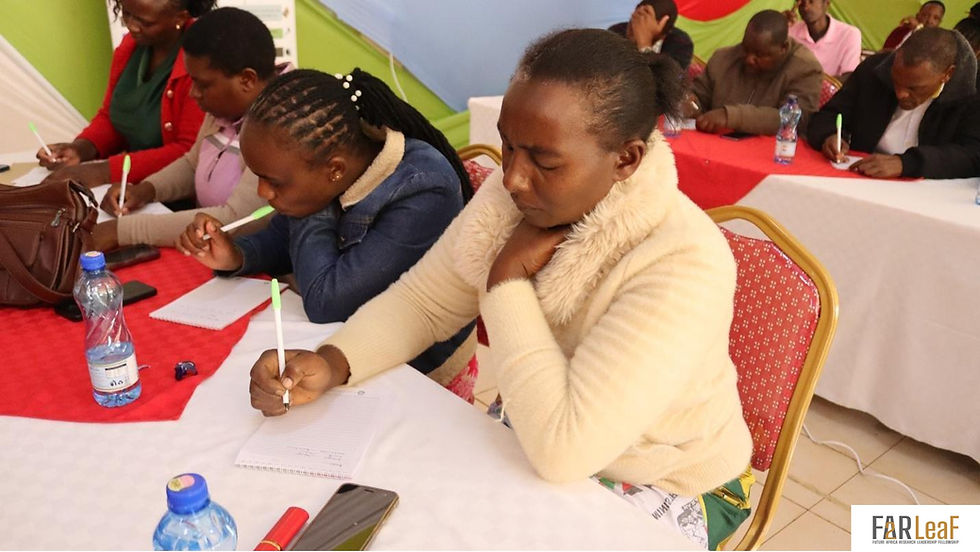
Key message: The fishbowl discussion method demonstrated the value of participatory dialogue in climate communication by creating space for participants to share their experiences, learn from one another, and contribute local perspectives to discussions on climate risks and adaptation.
4.3 Panel Discussion: Climate Information, Misconceptions and Stakeholder Perspectives
The panel discussion embraced a multidisciplinary approach to climate resilience by featuring respondents from different disciplines, including culture and indigenous knowledge, religious beliefs and directions, academic/scientific approaches, agricultural extension knowledge and experience, and a high school teacher of Agriculture. Dr Wambui was the moderator of the panel and asked specific questions of each panellist. The discussion provided an opportunity to broaden the conversation from the identification of climate risks and adaptation practices to how climate information reaches communities, how it is understood, and how different stakeholders can contribute to strengthening climate resilience. Given the strong representation of farmers among participants, the panel provided an important opportunity to consider climate information from the perspective of those who use it directly in their farming and livelihood decisions. The session brought together perspectives from different sectors and created space for participants to engage with issues emerging from the research and the earlier discussions. There was a period of questioning and commenting from the farmers to the panellists.

4.3.1 Sources of Climate Information
One of the key areas explored during the panel was the sources of climate information used by communities. The discussion considered the different channels through which farmers and community members receive information that may influence their understanding of climate risks and their adaptation decisions. This was an important dimension of the workshop because the availability of climate information does not necessarily mean it is readily accessed, understood, or used effectively. It also corroborated the desktop literature review, which highlighted the influence of religion, culture, and indigenous knowledge on smallholder farmers' uptake of climate science in Murang'a County. The discussion, therefore, drew attention to the importance of strategically formulating different communication pathways through which climate information reaches communities, and to the role played by different actors in providing or interpreting that information. This complements the research focus on ensuring that climate science is communicated in ways that are meaningful to its intended users.
4.3.2 Climate Information and Misconceptions
A critical aspect discussed by the panellists was the misconceptions identified during the study. The discussion highlighted that the availability of climate information does not necessarily lead to an accurate understanding of climate risks, particularly when existing perceptions or interpretations shape how information is received. For instance, it was brought to the participants' attention that there is a belief in the community that prolonged drought is caused by someone keeping a tortoise. The misconception was unpacked and elaborated that tortoises are also victims of climate change, and they move to farmlands during drought, and the community ends up killing them. It happens at the tail end of drought season (when they give up), and shortly after, it rains. That is how the misconception that “once they kill the tortoise, it rains” comes about. The issue, therefore, reinforced the importance of addressing misconceptions in climate science communication, rather than treating communication simply as the transmission of information. Participants reflected on the importance of recognising and addressing such misconceptions when communicating climate-related information. The discussion emphasised the need to present scientific information in ways that are clear, accessible and responsive to community experiences, so that people can better interpret the climate issues affecting their lives and livelihoods.
4.3.3 Perspectives from Different Stakeholders
Diverse viewpoints from religious, cultural, academic, policy and agricultural actors, as explained in the panel, highlighted the range of perspectives relevant to climate information and resilience. Through these interactions, each sector brought its own aspects of knowledge, experience and support, shifting the view of climate resilience from just a scientific or agricultural aspect to a multifaceted challenge shaped by faith, culture, policy and education alike, and whose solutions lie not in one of the perspectives, but through a collective perception and action designed from all the diverse perspectives. This underscored the transdisciplinary nature of efforts to address climate change risks faced by smallholder farmers in Murang’a County and possibly beyond. Below are four major viewpoints that emerged from the discussion, each reflecting the way different actors perceived the climate challenge and their respective roles in addressing it. Together, they underscore the importance of creating connections among research institutions, communities, policymakers, agricultural actors, information providers and other relevant stakeholders.
i) Faith-Based Perspectives on Climate Change | Fr. Mario Muthike, Catholic Diocese of Murang'a
The panel's religious representative (Fr. Mario Muthike, Catholic Diocese of Murang'a, an ordained priest in the Catholic Church) framed climate change as an issue affecting not only individual Christians but also the Church as an institution. He noted that many congregants respond to climate change-related issues, such as mudslides, primarily through a providential lens, attributing them to God's will and trusting that God will help address them or overcome the challenges they bring, but he argued that faith-based responses need not stop there. Drawing on scripture, he pointed to a mandate given to man to till, keep, protect and add value to the land. However, we have failed to fulfil the mandate given to us by God, and as a result, we have different climate risks, a sign that all is not well. Climate risks indicate negligence of the responsibility given by God. He indicated that environmental stewardship is both a religious and a practical responsibility. He introduced the concept of "ecological sin" to describe environmental harm, situating climate action within a moral and theological framework rather than treating it purely as a scientific or policy matter. He also highlighted that “ecological sins” are not forgiven by confession but by doing the right thing: “God does not punish us by allowing climate risks to affect us, but allows us to 'enjoy' the consequences of our actions." He further asserted that he had a duty to speak about the environment in addition to proclaiming the gospel, citing Laudato Si”, an encyclical written by Pope Francis, which calls on humankind to conserve the environment as “our home”. He also extended the church's contribution to climate resilience by supporting the broadcast of climate science through existing platforms, such as radio and local magazines, fostering youth involvement, and sensitising people about climate resilience from the pulpit.
Science bridges the gap by elaborating how, when and why we need to implement climate actions. The religious perspective added a dimension to the panel that connected climate resilience to community belief systems, suggesting that faith institutions can play an important role in encouraging environmental responsibility among congregants.
ii) Indigenous and Cultural Knowledge Systems | Mr James Njenga Njoroge, Kikuyu African culture
Mr James Njenga Njoroge (cultural leader on the panel) highlighted traditional practices that had historically supported both community health and climate resilience. He described how traditional diets were largely organic, enough for the population and consumed fresh without storage, which was associated with lower rates of chronic diseases. He noted that elders traditionally held intuitive knowledge of changing climate patterns, reading cues such as rainfall and sun patterns to anticipate seasonal shifts. He also referenced cultural belief systems, including customary sanctions understood to befall those who destroyed the environment, that functioned as informal mechanisms of environmental accountability within communities. He argued that people should take responsibility for controlling the release and consumption of gases that affect the climate, and observed that communities' vulnerability to climate change stems from their long-standing presence on the land rather than from external or "modern" influences. He encouraged the integration of traditional and modern approaches to addressing climate change and applying localised solutions. This contribution reinforced the workshop's broader theme of valuing local and indigenous knowledge alongside scientific evidence: “The past is not in conflict with the present, so we have no objection to the recommended practices about climate resilience. But in consideration of population growth, I do not think the Creator of the universe was that disorganised to place solutions to local issues abroad. Let us always explore our solutions to our issues from within. The foreign 'solutions' we obtain from the West do not represent our problems, and I believe, we import solutions to their problems which may not match with ours.” The cultural leader called on farmers to listen to the adaptive measures offered and embrace those that are local and practical, rather than those that are foreign. He also noted that nature has its own way of communicating with people and guides what ought to be done from time to time. Thanking the researchers for studying the changes, he called upon farmers to be keen on environmental changes, as it is through these changes that nature communicates.
iii) Policy and Agricultural Extension Perspectives | Mr Hezekiah Njoroge Kariuki, Assistant Director of Agriculture (represented the Agricultural Extension service in Murang'a County)
Mr Hezekiah Njoroge Kariuki's contribution highlighted structural and policy-level constraints affecting the county's climate-related risk response. He noted that awareness of climate change among agricultural officers is not new, but that extension services remain limited on the ground due to the low ratio of extension officers to farmers. He characterised this as a policy issue affecting the county's overall agricultural productivity. He linked population growth to land clearance and homestead expansion, which in turn increases soil erosion, and noted that extension officers are limited to advisory roles and cannot enforce compliance with recommended practices. Noting that agricultural officers are the closest source of guidance for farmers on climate resilience, specifically pointed out that recruitment of extension officers has been minimal for decades, with no systematic replacement of retiring/separated staff. He noted that the current ratio of extension officers is 1:6,000, which has led to training being delivered in groups rather than individually to reach farmers effectively. He referenced county-level interventions, including soil rehabilitation and water tunnel construction under the National Agricultural Value Chain Development Project (NAVCDP), alongside efforts to reintroduce traditional, climate-resistant food crops by distributing cuttings and seeds suited to different agro-ecological zones. He also mentioned a draft organic farming policy, noting that the Agro-Ecological Policy is already in place in Murang’a County. He encouraged the use of local language to communicate with farmers on climate-related risks and interventions.
iv) Agricultural Education and the Next Generation | Mr John Njoroge, St. Angela Kiriaini Girls Senior School
Mr John Njoroge, agricultural teacher on the panel, raised concerns about declining student uptake of agriculture as a subject, describing it as demanding, "dirty work" that fewer students are choosing to pursue. He reflected that, back in the day, students were told to work harder to achieve academic excellence, if they didn't want to be on the farms all along. This formation spelt a perception that Agriculture is a "dirty affair". He argued that sensitising students to the importance of agriculture and exposing them early and directly to innovative agricultural techniques, such as multi-storey farming and tissue culture, is nonetheless important for shifting perceptions and demonstrating that agriculture can be modern and viable. He also touched on emerging low-cost innovations being explored through research, such as the use of rabbit urine, and stressed the need to keep pace with developments in short-season crop varieties. He highlighted monocropping as a common but problematic practice, noting that it depletes soil nutrients and increases pest pressure. This perspective added generational and educational dimensions to the panel, linking climate resilience to how agriculture is taught and perceived by young people.
Mr Eliud Kibet Bitok, a Tutorial Fellow in the School of Agriculture and Environmental Sciences at Murang'a University of Technology, highlighted the need to bridge the gap between science and practice among farmers. He mentioned that for the community to adapt to climate change, there is a need to disseminate information in the local dialect, demystify locals' misconceptions, encourage farmers to diversify, and train students. At this point, the lecturer from the Department of Agriculture at Murang’a University presented the demo-farm on one of the university’s campuses (Mariira campus) and the outreach programme they hold with farmers to demonstrate innovative agricultural techniques.
4.3.4. From Dialogue to Collaboration
The event further shifted the discussion to the question: “What can be done to strengthen climate communication and resilience beyond the workshop?” The presentation aimed to identify areas of support, collaboration, opportunities and way forward, providing a basis for considering how stakeholders could continue working together. On one hand, the religious representative offered to collaborate with academic institutions and researchers by providing a platform to intentionally disseminate climate information from the church's communication channels. He also offered a magazine page in their monthly publication's climate science feature, which is mostly written in the local dialect. The church owns the local radio station, Radio Maria FM, that broadcasts throughout Murang’a county, mostly in the local dialect. He requested that the FAR-LeaF Project leader consider hosting a session or recording podcasts to communicate information on climate adaptation and resilience to the people of Murang’a. The offer came in handy to support the theme of the day, “Communicating it their way”. Murang’a University, on the other hand, invited farmers to its innovation hub and demonstration farms in the Marrira location, where it organises agricultural shows and provides training. This part of the discussion was particularly important because it shifted the focus from identifying challenges to considering opportunities for action. Rather than positioning climate resilience as the responsibility of a single institution or sector, the discussion emphasised the potential for collaborative approaches that connect different actors and knowledge systems.
By introducing an institutional and communication perspective to the discussion, the panel complemented the earlier sessions. While the previous sessions focused primarily on what climate risks communities experience and how they respond, the panel considered how information, institutions and different stakeholders could support communities in responding to those risks.
Key message: The panel demonstrated that effective climate resilience depends not only on the availability of climate information but also on how that information is communicated, understood and connected to community realities. Addressing misconceptions and strengthening collaboration among different stakeholders can help create more effective pathways for communicating climate information and supporting locally relevant climate action.
4.4 Climate Change Adaptation Measures and Strategies for Different Regions of Murang’a County – Dr Orek Charles (Senior Lecturer & Research Scientist, Department of Agriculture, Murang'a University of Technology)
The presentation by Dr Orek Charles built on the earlier discussions by providing a practical overview of climate change adaptation measures and strategies for different regions of Murang'a County. While the earlier session presented adaptation practices identified through the research and participants' experiences, Dr Charles' presentation focused on a broader range of practical adaptation measures that could be applied in response to the specific climate risks affecting the Highlands, Midlands and Lowlands. His presentation was full of pictures, which made it easy to understand what was being recommended. The presentation began with an overview of the impacts of climate change on key areas, including agriculture, livestock production, food security, human health and water resources. The food-security impacts highlighted included reduced food availability and access, increased food prices, increased malnutrition and disrupted value chains.

4.4.1 Adaptation Strategies for the Highland Regions
The presentation identified Kangema, Mathioya, parts of Kiharu and Gatanga as Highland areas. The major climate risks identified included increased rainfall variability, landslides, soil erosion, frosts in some areas, coffee and tea diseases, and flooding along river valleys. In response, Dr Charles presented strategies including terracing and contour farming, agroforestry, rehabilitation and drainage systems, conservation agriculture, water harvesting, drip irrigation, soil fertility management, climate-resilient coffee and tea varieties, integrated pest and disease management, riverbank protection, controlled grazing, early warning systems, Farmer Field Schools, Climate Information Services and crop insurance. He also recommended shifting people to safer areas in areas prone to mudslides at the onset of the rainy season.
4.4.2 Adaptation Strategies for the Midland Regions
The Midland areas identified included Maragua, Kigumo, parts of Kandara, Kiharu and Gatanga. The major risks discussed were unpredictable rainfall, dry spells, moderate droughts, declining soil fertility, and crop pests and diseases. The proposed strategies included minimum tillage, crop diversification, drought-tolerant varieties, integrated soil fertility management, farm ponds and water pans, drip irrigation, water harvesting, agroforestry, crop rotation and intercropping, mulching, composting, integrated pest and disease management, fodder production and preservation, beekeeping diversification, improved postharvest management, farmer cooperatives, climate-resilient marketing, weather-index insurance and Climate Information Services.
4.4.3 Adaptation Strategies for the Lowland Regions
The Lowland areas included Makuyu, Mbali, Lower Gatanga and Lower Maragua. The major risks highlighted were frequent droughts, high temperatures, water scarcity, crop failure, shortages of livestock feed, heat stress, and flash floods. The presentation proposed adaptation strategies, including drought- and heat-tolerant crop varieties, resilient livestock breeds, efficient irrigation systems, water-harvesting structures, conservation agriculture, mulching and cover cropping, drought-tolerant agroforestry, rotational grazing, integrated pest management, farm diversification, drought early-warning systems, and index-based livestock insurance.
4.4.4. Linking Climate Risks to Adaptation
A key contribution of Dr Charles' presentation was its emphasis on aligning adaptation strategies with the specific climate risks facing different regions. Rather than promoting a single approach for the entire county, the session demonstrated that farmers require adaptation options that reflect their environmental, agricultural and livelihood conditions. The presentation also expanded the range of options discussed during the workshop by highlighting both on-farm measures, such as water harvesting and climate-resilient crop varieties, and broader resilience measures, including early warning systems, Climate Information Services, Farmer Field Schools and insurance mechanisms. At the end of the presentation, Dr Charles distributed climate adaptation measures to the audience as a reference point for when they encountered issues or needed to advise other farmers on adapting to observed climate changes.
Key message: Dr Orek Charles' presentation emphasised that effective climate adaptation requires region-specific responses to region-specific risks. By considering the different conditions affecting the Highland, Midland and Lowland regions, farmers and other stakeholders can identify a range of adaptation options relevant to their particular contexts.
4.5 Innovative Science Communication Strategies
After presenting adaptation measures across different contexts, Dr Wambui presented strategies for enhancing climate science communication to a wider audience of farmers in Murang'a County. In an earlier expert discussion, she presented the different strategies of science communication shown in the figure below.

The proposed science communication strategies provide a multi-channel, participatory and locally grounded approach to strengthening climate resilience among smallholder farmers in Murang'a County. By combining trusted community platforms, farmer-to-farmer learning, indigenous knowledge, practical demonstrations, creative and visual communication, youth engagement, digital platforms and strengthened extension services, the approach moves beyond one-way dissemination towards dialogue, knowledge exchange and action. Effective implementation is expected to increase awareness and understanding of climate risks, reduce misconceptions, strengthen the integration of scientific and indigenous knowledge, improve access to timely and credible climate information, and enhance community ownership of adaptation interventions. Ultimately, these strategies are expected to support greater uptake of appropriate climate adaptation practices, collective community action and improved climate resilience and livelihoods among farming communities.
In her presentation, she asked the audience to share the different communication channels and methods they use. The audience unanimously acknowledged the importance of using the local language in science communication and applauded “the organising team that considered having the workshop in the local dialect”. They also singled out radio and TV broadcasts, chiefs' barazas, posters and billboards, visits to demonstration farms, video clips, and interactive tools as key communication strategies within the county. Dr Wambui requested that the audience volunteer to collaborate on developing some of the strategies mentioned. It was interesting to see hands go up in the audience, expressing interest in becoming climate resilience ambassadors by participating in the development of skits and video clips and by discussing climate resilience at their local gatherings, such as chiefs’ barazas and group meetings. They sought to receive visual information packages co-developed with them for sustainability purposes. "I will sing a song about climate change and resilience," was so humbling to come from one of the farmers, "I know it will spread across Murang'a County and beyond, and I am sure people will get the message."
Key message: Science communication doesn’t embrace a ‘one size fits all’ strategy. It means obtaining a suitable science communication strategy for a particular audience, ensuring that climate information is communicated in their way. In the design stage of each strategy, it is useful to consider the favourable channels, methods, and language for each audience, while also taking into account the factors that influence their understanding, such as religion, culture, and their existing indigenous knowledge.
4.6 Interactive Reflection and Icebreaker
The final session provided an opportunity for participants to reflect on their learning and experiences throughout the workshop through an interactive icebreaker and reflection activity. Participants were invited to consider what they knew before the workshop and what they had learned from the presentations, discussions, and activities, particularly regarding climate risks and adaptation. The activity encouraged participants to share their experiences, observations and perspectives, creating an informal space for participants to learn from one another. Rather than focusing solely on what was presented during the workshop, the reflection highlighted the knowledge and experiences participants already possessed regarding climate change and its effects in their communities.

A key reflection was that participants already had practical knowledge of climate risks based on their own experiences. The workshop, therefore, provided an opportunity to connect this existing knowledge with the research findings and scientific information shared during the sessions. This helped participants relate the information presented to situations they encounter in their own communities and livelihoods. The reflection also provided an opportunity to consider how the different sessions had contributed to participants' understanding of climate risks and adaptation. By ending the workshop with participant reflection rather than another technical presentation, the session allowed participants to consolidate the issues discussed and identify what was most relevant to their own experiences.
Key message: The reflection session demonstrated the value of connecting research and scientific information to participants' existing knowledge and lived experiences, making the workshop's learning more relevant to their local contexts.
5.0 OVERALL WORKSHOP OUTCOMES AND REFLECTIONS
The Science Communication for Climate Resilience Workshop demonstrated the value of bringing together scientific evidence, local knowledge and participatory engagement in discussions on climate resilience. The combination of research presentations, interactive activities, participant discussions and reflection created opportunities for participants to connect climate science with their own experiences and realities. A key outcome was the recognition that climate change is already a lived reality for communities in Murang'a County. The experiences shared during the workshop demonstrated that participants could relate directly to the climate risks presented through the research. This helped ground the discussion in the realities of farmers and other participants rather than treating climate change solely as a scientific or technical issue. The workshop also highlighted the capacity of communities to respond to climate risks. Participants shared a range of adaptation practices reflecting the different environmental and livelihood conditions across Murang'a County. The diversity of these responses demonstrated the importance of recognising local circumstances when considering climate resilience and adaptation. Another important reflection was the role of climate information in supporting decision-making. The discussions showed that the effectiveness of climate information depends not only on its availability but also on whether people can understand, interpret and relate it to their circumstances. The issue of misconceptions further highlighted the need for communication approaches that respond to how communities receive and understand climate-related information.
The workshop further demonstrated the value of bringing different perspectives into climate resilience discussions. The participation of farmers, teachers, master's students from Murang'a University, and key stakeholders, together with the perspectives represented during the panel discussion, created opportunities for knowledge exchange among community, academic, and institutional perspectives. Overall, the workshop reinforced the importance of connecting scientific knowledge with lived experience. Rather than viewing scientific and local knowledge as separate, the discussions demonstrated the value of creating spaces where the two can inform one another. Such engagement can contribute to climate communication that is more relevant to local realities and better positioned to support informed responses to climate risks.
Key Workshop Outcomes
The workshop resulted in several key outcomes:
Increased recognition of the local and lived impacts of climate change, particularly through participants' reflection on risks affecting their communities and livelihoods.
Greater appreciation of community knowledge and locally developed adaptation practices, including the experience-based responses shared by participants.
Increased understanding of the importance of locally relevant climate information that responds to the circumstances and information needs of communities.
Greater recognition of the need to address climate misinformation and misconceptions that may influence how climate risks are understood.
Strengthened appreciation of multi-stakeholder collaboration and the contribution of different actors to climate resilience.
Reinforced understanding of the importance of effective climate science communication, particularly communication that is understandable, relevant and useful to communities.
Greater emphasis on two-way knowledge exchange, recognising communities as active contributors whose experiences and knowledge can complement scientific evidence.
6.0 WAY FORWARD AND RECOMMENDATIONS
The discussions and reflections during the workshop highlighted the need to strengthen the connection between climate research, climate information, community knowledge and practical adaptation action. The following areas emerged as important considerations for moving forward:
1 | Strengthen Community-Centred Climate Communication |
Climate information should continue to be communicated in ways that are understandable, relevant and actionable for the communities that use it. Communication approaches should take into account the experiences, information needs and realities of smallholder farmers rather than relying only on technical or scientific terminology. | |
2 | Recognise and Integrate Local Knowledge |
The adaptation practices identified by participants demonstrate that communities already possess valuable knowledge for responding to climate risks. Future climate resilience initiatives should create opportunities to document, share and integrate locally developed practices with scientific knowledge. | |
3 | Strengthen Access to Reliable Climate Information |
The workshop highlighted the importance of understanding the different sources communities use to obtain climate information. Continued efforts are needed to improve access to information that communities can trust and use to make decisions about farming and other livelihood activities. The research also identified misconceptions, emphasising the need for communication approaches that can improve understanding of climate risks. | |
4 | Promote Multi-Stakeholder Collaboration |
Climate resilience requires collaboration among different actors. The workshop brought together perspectives from religious, cultural, academic, policy, agricultural, and meteorological spheres, demonstrating the value of integrating diverse knowledge systems and areas of expertise into climate resilience discussions. Future engagement should therefore continue to create platforms where these stakeholders can work together with communities to identify risks, improve climate communication and support appropriate adaptation responses. | |
5 | Build on Existing Adaptation Practices |
The adaptation strategies identified across Murang'a County's Highlands, Midlands and Lowlands provide a basis for further learning and engagement. Future interventions should consider how existing practices can be supported, strengthened, and shared, while recognising that adaptation needs vary with local conditions. | |
6 | Continue Dialogue and Knowledge Exchange |
The participatory activities demonstrated the value of creating spaces where participants can discuss their experiences and learn from one another. Future capacity-strengthening activities should continue to use interactive discussions, reflection, peer learning and participatory approaches alongside formal presentations. | |
7 | Explore Opportunities for Continued Support and Collaboration |
The workshop presentation identified areas of support, collaboration, and opportunity, as well as a way forward, providing a basis for continued engagement beyond the workshop. Further collaboration can help sustain the conversations initiated during the workshop and strengthen the translation of climate knowledge into practical community action. | |
8 | Future climate resilience initiatives should continue to move beyond a one-way model of communicating scientific information towards participatory, two-way communication that brings together scientific evidence and community knowledge to support locally relevant adaptation and resilience. |
7.0 CONCLUSION
The Capacity Strengthening and Dissemination Workshop provided an important platform for connecting climate science, research evidence, community experiences and adaptation strategies. Through presentations, interactive activities, discussions, and reflection, participants explored the climate risks affecting communities in Murang'a County, the adaptation practices already used by farmers and communities, and a broader range of practical strategies to support climate resilience. The workshop demonstrated that climate change is not a distant or abstract issue for communities. Participants were able to identify climate risks they had personally experienced and reflect on how these risks affect their livelihoods and local environments. The discussions across the Highland, Midland and Lowland regions further demonstrated the importance of context-specific adaptation, as climate risks and appropriate responses differ across geographical areas.
The workshop reinforced that strengthening climate resilience requires more than generating scientific knowledge. Climate information must be communicated in ways that people can understand and relate to their circumstances, while existing community knowledge and experiences should be recognised as important to climate resilience. Presenting the workshop in the local dialect in most sessions enabled people to connect with their context. The participation of farmers, teachers, master's students and key stakeholders, together with the different perspectives represented during the panel discussion, further demonstrated the value of collaboration and knowledge exchange. Participants identified diverse and complementary communication approaches for extending the climate resilience narrative beyond the workshop. These included digital media such as TikTok; print and written communication through articles; creative approaches such as a song; experiential learning through farm training and demonstrations; institutional platforms such as university demonstration farms; and community broadcasting through vernacular radio. This demonstrated the importance of using multiple communication channels to reach different audiences.
Ultimately, the workshop brought the “Communicate It Their Way” principle into practice. The discussions demonstrated that effective climate communication should be grounded in local realities and informed by the experiences of the people it seeks to reach. The workshop, therefore, provides a strong basis for continued engagement on climate science communication, context-specific adaptation and knowledge exchange among smallholder farmers and other stakeholders in Murang'a County.
Workshop report submitted by Dr Ruth Wambui.