FAR-LeaF, Partners train tomato farmers on climate-smart agriculture
- May 31, 2025
- 2 min read
Originally published in The Guardian by Saxone Akhaine, 2 July 2026
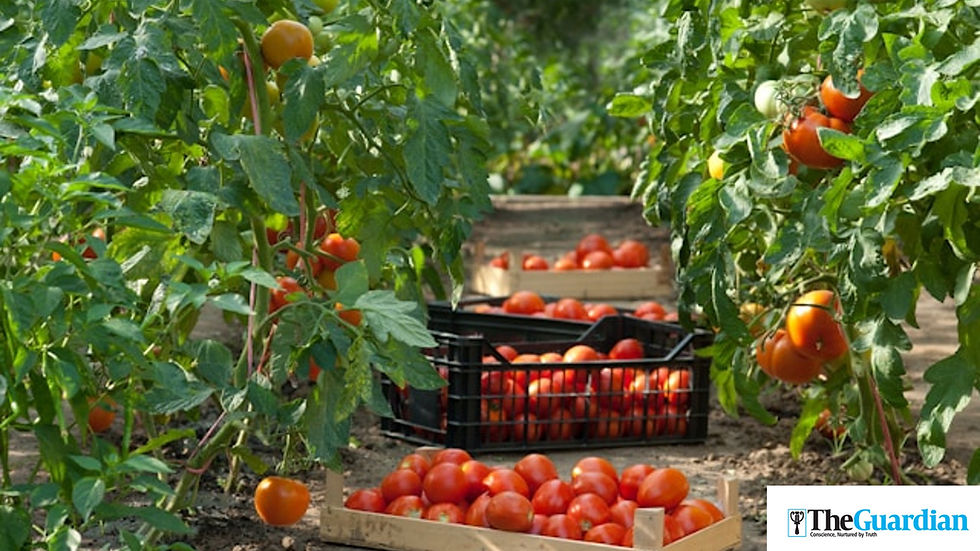
More than 100 tomato farmers, processors, marketers, and other value chain actors from Nigeria’s North-West geopolitical zone have been trained in climate-smart agriculture to boost production, reduce post-harvest losses, and improve resilience to climate change.
The capacity-building workshop, held in Zaria, was organised by the Future Africa Research and Leadership Fellowship (FAR-LeaF II) Programme in collaboration with the Nigerian Stored Products Research Institute (NSPRI), the National Institute for Freshwater Fisheries and Aquaculture Studies (NIFAAS) and other partners. Speaking at the workshop, the convener, Dr Ololade-Latifat Abdulrahman, said the initiative was designed to address the growing threats posed by climate change to tomato production and the livelihoods of thousands of Nigerians who depend on the crop.
She described tomatoes as one of Nigeria’s most important food crops, providing food, income and employment for millions of people. Abdulrahman, however, noted that erratic rainfall, rising temperatures, pest infestations, diseases and high post-harvest losses continue to undermine productivity. According to her, building the capacity of farmers and other value chain actors is essential to improving yields, reducing waste, creating employment opportunities and ensuring a sustainable supply of quality tomatoes across the country. She said the training forms part of a research project titled “Climate Vulnerability and Adaptive Capacity of Tomato Value Chain Actors,” which examines the effects of climate change on stakeholders while identifying practical adaptation strategies to strengthen resilience.
She explained that the study's findings would provide evidence to support policymaking, strengthen agricultural extension services, and guide interventions that help farmers, processors, marketers, and transporters adapt to changing climatic conditions. The convener disclosed that participants would receive improved tomato seeds and plastic crates to encourage the adoption of climate-smart farming practices and better post-harvest handling techniques introduced during the training.
Abdulrahman also commended FAR-LeaF II, NSPRI, NIFAAS and other collaborating organisations for supporting the programme, describing the partnership as critical to advancing sustainable agriculture and improving livelihoods. One of the participants, Malam Aliyu Umar, an Agricultural Extension Officer with the Kaduna State Agricultural Development Agency (KADA), said the workshop exposed extension workers and farmers to practical methods for improving tomato production and reducing post-harvest losses. He added that the improved seeds distributed during the programme would help farmers better cope with the effects of climate change.
Also speaking, Malama Asibi Hassan, a tomato farmer and processor from Sabon Gari Local Government Area, described the training as timely, saying it enhanced participants’ knowledge of tomato packaging, preservation and value addition. She attributed the rising cost of tomatoes in many parts of the country to inadequate preservation and processing facilities, noting that large quantities of harvested tomatoes are lost before reaching consumers.
Hassan appealed to governments and development partners to complement such training with subsidised processing equipment, solar dryers, greenhouses, and other technologies to support year-round tomato production, processing, and preservation.